
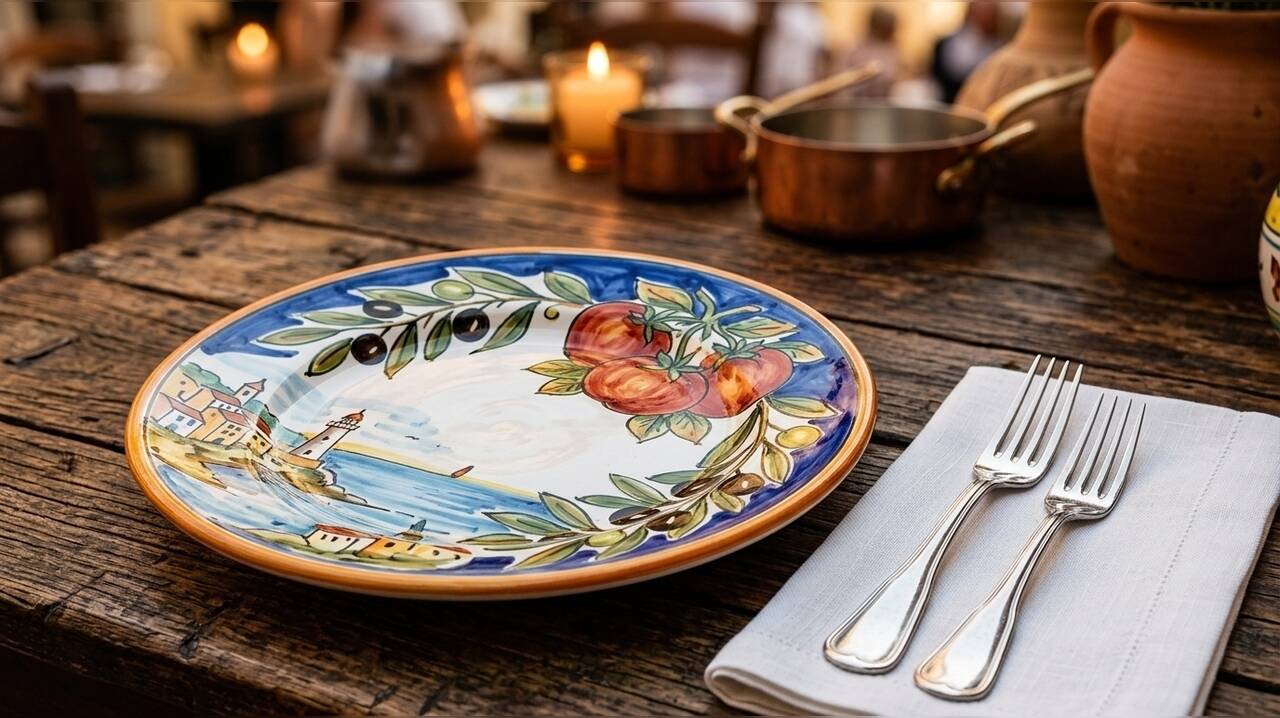
For more than sixty years, a unique tradition in Italy has transformed the act of dining into a lasting souvenir. Known as the Piatti del
The initiative was launched in April 1964 in Milan by advertising executive and cultural promoter Dino Villani. At the time, Villani sought to bolster the profile of traditional regional Italian cooking, which was facing stiff competition from French-influenced cuisine. By founding the
Crafting a Culinary Legacy
The plates associated with the Buon Ricordo tradition are distinct from standard restaurant dinnerware. Each piece is a bespoke ceramic, typically hand-painted by artisans in Vietri sul Mare on the Amalfi Coast. Since 1985, graphic designer Paolo Argenton has been responsible for translating the unique characteristics of each restaurant’s signature dish and its surrounding territory into visual designs. These illustrations serve as a bridge between the diner’s meal and the specific region where it was prepared.
Participation in the programme is tied to specific menu offerings. When a customer orders the restaurant’s designated “Buon Ricordo” dish, the commemorative plate is included as part of the experience. This structure ensures that the souvenir remains linked to the culinary identity of the establishment, rather than serving as a generic memento. Over the decades, this practice has fostered a dedicated following, with a formal Association of Collectors established in 1977 to document the various designs and histories associated with the plates.
Expanding Beyond Borders
The movement has grown significantly since its inception, when it consisted of only 12 founding restaurants. By the late 1970s, membership had approached 100, and the concept eventually expanded beyond Italy’s borders during the 1980s. This international growth allowed restaurants abroad to join the network, further promoting the appreciation of regional Italian food culture on a global scale.
Today, the tradition remains active, serving as both a form of culinary promotion and a method of cultural preservation. According to the organisation’s 2026 guide, there are currently 111 participating establishments, with 103 located within Italy and eight situated internationally. As the programme continues, the plates have also found a life outside of the dining room; vintage ceramics are frequently sought after by collectors and found in antique markets, serving as a visual travel diary for those who have traversed the country’s diverse culinary landscape.




