
Belgium has reached a significant milestone in the construction of the world’s first artificial energy island, a massive infrastructure project located 45 kilometres off the Belgian coast. The project, known as
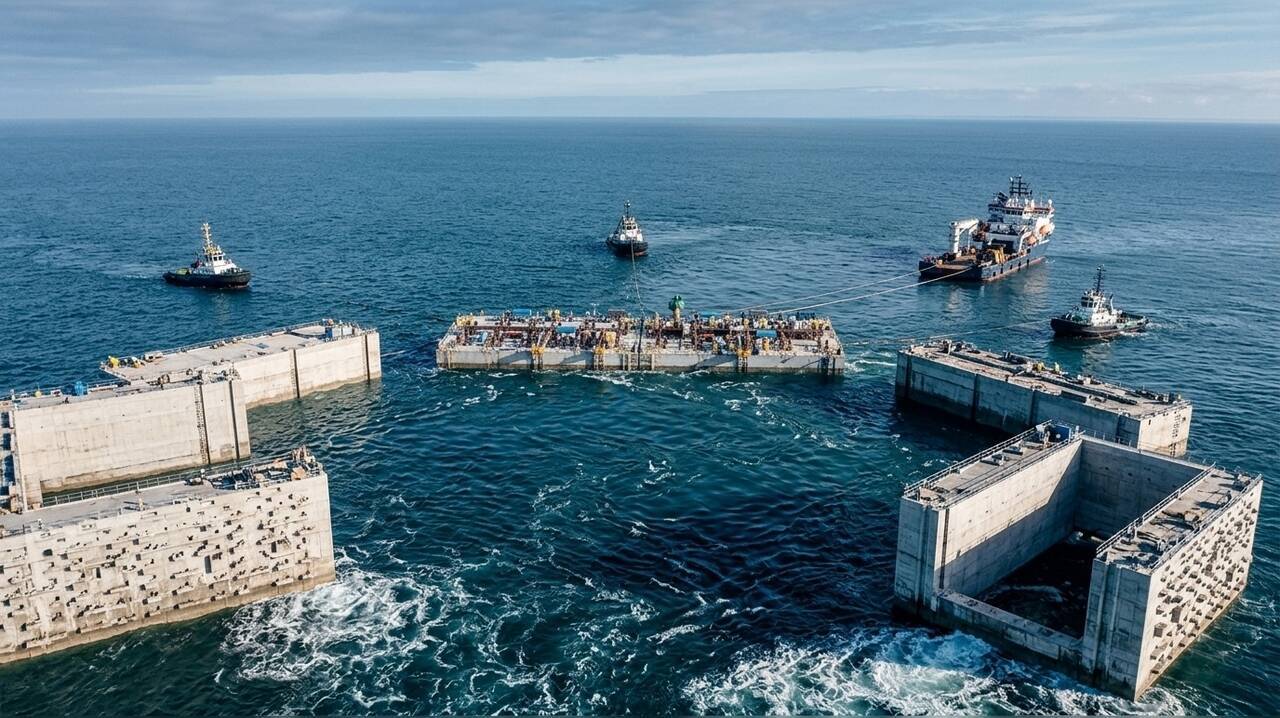
The island is being constructed using 23 massive concrete caissons, each weighing approximately 22,000 tons. These structures, which measure up to 58 metres in length and 32 metres in height, were manufactured in the Netherlands. As of January 2026, the final caisson has been completed, marking the conclusion of the manufacturing phase and the transition to the installation process. The project is being managed by the Belgian electricity system operator Elia, in collaboration with the TM Edison consortium, which includes engineering firms DEME and Jan De Nul.
Engineering and Operational Scope
The installation process involves towing the partially submerged caissons to a prepared bedrock foundation in the North Sea. Once positioned, the blocks are filled with sand to ensure stability. This operation is conducted over a two-year period, with work paused during the winter storm season. The first phase of immersion began in April 2025 and is scheduled to resume in the spring of 2026. The entire installation cycle for each unit takes approximately 24 hours.
Once completed, the island will function as a critical node in the European electricity network. It is designed to integrate high-voltage alternating current and high-voltage direct current, a combination that distinguishes it as the first of its kind. The facility will support the Princess Elisabeth Zone, a 285-square-kilometre area expected to generate up to 3.5 gigawatts of offshore wind energy. Furthermore, the island is intended to facilitate international energy exchanges through planned interconnectors with the United Kingdom and Denmark.
Environmental Integration and Financial Challenges
The project incorporates a nature-inclusive design, developed in partnership with marine conservation experts. The exterior walls of the island feature structures intended to support the roosting and breeding of kittiwakes, a species considered threatened in the North Sea. Additionally, submerged elements have been included to provide habitats for marine organisms, such as the European flat oyster. The development of these habitats will be monitored for over six years under the NID4BirdLIFE program.
The financial scale of the project has shifted significantly since its inception. While the European Investment Bank approved €650 million in financing for the initial phase, the total estimated cost has risen to €7 billion. This increase is largely attributed to the rising costs of electrical equipment, which has prompted discussions regarding the project's financial viability. Despite these challenges, the current timeline anticipates that civil engineering work will conclude by mid-2026, with the electrical infrastructure to be installed between 2026 and 2030. The island is expected to become fully operational by 2030.




