
When
The survival of such organic material has allowed researchers to conduct detailed examinations of ancient food preparation. The
The mechanics of Roman baking and identification
Archaeological evidence indicates that
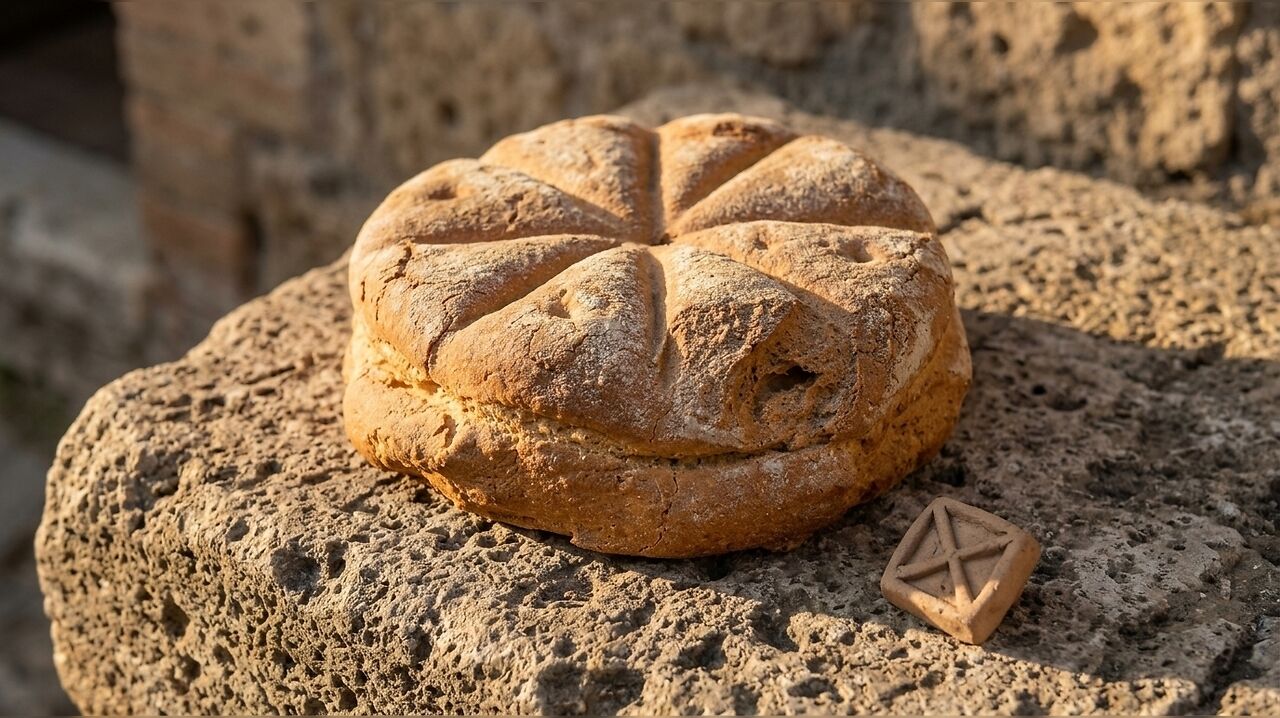
Beyond the structural design, the presence of stamps on the dough suggests a system of ownership or quality control. In Roman towns, residents often prepared their own dough at home but relied on communal ovens for the baking process. To distinguish their loaves from those of other households, bakers used stamps to leave identifying marks on the dough. One notable example from the House of the Brick Altar features the letters “VM” pressed into a six-section loaf, though the specific meaning of these initials remains a subject of ongoing research.
Reconstructing ancient culinary traditions
The significance of these findings was highlighted during a 2013 exhibition at the British Museum, which focused on the life and destruction of Pompeii and Herculaneum. To provide a modern perspective on the ancient craft, the museum collaborated with chef Giorgio Locatelli to recreate the bread. Using a recipe that incorporated wholemeal, spelt, or buckwheat flour alongside a sourdough starter, the project demonstrated the technical precision required to produce the loaves found in the ruins.
The recreation process involved shaping the dough into a ball, using string to create a raised edge, and carefully cutting the top into sections before baking at 200 degrees Celsius. In addition to these large loaves, excavations have unearthed smaller, circular flatbreads featuring geometric and plant-like designs. These items, often found in stacks along the Lower Decumanus, are believed to have been sold in thermopolia, the ancient equivalent of prepared-food shops. These discoveries continue to serve as a primary source for understanding the dietary customs and commercial infrastructure of Roman society before the eruption of Vesuvius.




